


Plastic Product Molding
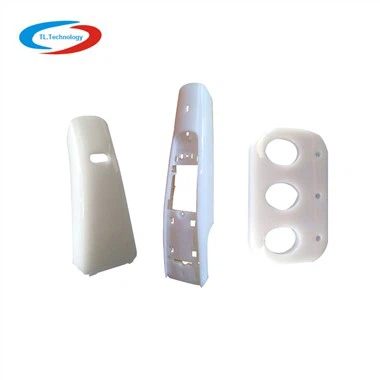
What is Plastic Product Molding
Plastic moulding is the process of pouring liquid plastic into a certain container or mould so that it hardens in that customized shape. These plastic moulds can then be used for a wide range of purposed. There are 5 types of plastic moulding that is considered to be the most effective and most popular.
Benefits of Plastic Product Molding
Provide uniformity
Using the same mold to form all parts ensures that the parts remain the same size without a lot of effort (and therefore less cost). Part tolerances can be +/- 0.125 mm (0.005 in), and are typically +/- 0.500 mm (0.020 in) compared to CNC machined or 3D printed parts.
Cut costs
Due to the nature of injection molding, the more parts you produce, the less you pay per unit. This method of manufacturing requires virtually no labor or time costs once the initial equipment and materials are installed. Injection molding is the cheapest plastics process at scale because it can produce hundreds or thousands of parts per day.
Increase production speed
While other manufacturing methods, including CNC machining and 3D printing, require more work per part, injection molding only requires an injection of material and cooling time to create the part (however, some part types do require secondary machining, depending on the its application). Throughput can also be increased by introducing mold cavitation (the number of hollow shapes within each mold). But it's worth noting that this only applies after the tool is made. Mold creation increases lead time for new molded parts.
Good for compatibility
Some forms of injection molding, such as overmolding and insert molding, can use multiple materials to create a single part. It is estimated that more than 18,000 thermoplastics, thermosets and elastomers can be used in injection molding itself. This means it's easy to create widgets that are compatible with the components they interact with.
Ability to manufacture complex parts at less cost
Because it involves filling plastic into a mold, complex and complex parts can be manufactured in large quantities through this method without requiring extensive labor or time. It is important to ensure that the design follows injection molding best practices, which we will cover in further detail.
Material flexibility
Since injection molding can utilize thousands of plastics and additives, it's easier to find a plastic with the properties you need.



Product Categories
Latest Products


Why Choose Us
Efficient Communication
Once you send out the inquiry, please pay attention to your email box, since we will reply to your email.
Quality Assurance
We make sure to ship you high-quality, qualified products that are 100% inspected before packaging.
Fast Delivery
For urgent orders, we can coordinate to ship within a week. Usually the delivery time is 15-20 days. For sample, we can ship within 3 days.
Excellent After-sales Service
What we want is a long-term business with you, not just one-time cooperation. So we are responsible to you to the end. Your satisfaction is our goal.
How Does Plastic Injection Molding Work
Choosing the right thermoplastic and mold
Before the actual process can begin, the right thermoplastic and mold need to be selected. To do this, manufacturers need to consider how thermoplastics and molds interact, as certain types of plastics may not be suitable for specific mold designs.
If a suitable mold for the required component does not already exist, you will need to prototype and test it using the correct thermoplastic. Thanks to advances in computer-aided design (CAD) technology, most prototyping can be done digitally. 3D printing can also be used to create prototype molds, but the final tool is usually a steel or aluminum mold.
In addition to the mold, there is also the need to select the appropriate thermoplastic. Each thermoplastic has different properties, including temperature and pressure resistance. These specific properties will make them suitable for use in certain molds and parts.
Feed and melt thermoplastic
At the most basic level, an injection molding machine consists of a feeder or "hopper" located at the top of the machine; a long cylindrical heated barrel that houses a large injection screw; a gate located at the end of the injection unit; and Selected mold for gate connection.
To start the process, selected plastic pellets are fed into the hopper. As the screw rotates, the particles are gradually fed into the temperature-controlled machine barrel. The rotation of the screw and the heat from the barrel gradually heat and melt the thermoplastic.
Maintaining the correct temperature during this part of the process is key to ensuring efficient injection of plastic and accurate formation of the final part. Otherwise, the thermoplastic may overheat and burn or scorch the final part.
Pre-injection process
The mold, which typically consists of a fixed part called the cavity and a moving part called the core, is closed before the molten thermoplastic is injected. The two parts are held together under high pressure, called clamping pressure. Injection pressure and clamping pressure must be balanced to ensure the part forms correctly and no plastic escapes from the tool during the injection process.
Once the molten polymer reaches the end of the barrel, the gate (which controls the plastic injection) closes and the screw moves backwards. This draws in a certain amount of plastic and builds pressure in the screw, ready for injection.
Inject plastic into mold
Once the tool and screw reach the proper pressure, the gate opens, the screw moves forward, and molten polymer is injected into the mold. Gates help control the flow of plastic so no unwanted shapes are created.
To ensure that the final part does not break, manufacturers must monitor pressure and temperature and have the expertise to properly maintain and use mold tooling. This ensures they create high-quality and consistent parts through the injection molding process.
Form parts
Once the majority of the plastic is injected into the mold, it is held under pressure for a set period of time. This is called "hold time" and can range from a few milliseconds to several minutes, depending on the type of thermoplastic and the complexity of the part. This holding time is critical to wrapping the tool in plastic and forming the part correctly.
After the holding phase, the screw retracts, releasing the pressure and allowing the part to cool in the mold. This is called the "cooldown time" and can also range from a few seconds to a few minutes. This time ensures the components are set up correctly before being ejected and finished on the production line.
Ejection and finishing processes
After the holding and cooling time has passed and the part is basically formed, an ejector pin or plate pushes the part out of the tool. They drop into a compartment or conveyor belt at the bottom of the machine.
In some cases, finishing processes such as polishing, staining, or removing excess plastic (called spurs) may be required. This can be done by other machinery or operators. Once these processes are complete, the components can be packaged and distributed to customers.
The Future of Plastic Injection Molding
The future is bright for the plastic injection molding industry, with several new technologies showing a great degree of promise.
Internet of Things (IoT) technologies like sensors and automation solutions, for instance, allow for increased connectivity across the entire production system. This provides better visibility into the status of the injection molding process while also better positioning manufacturers to produce higher-quality parts at reduced costs. Automated solutions like robotic unloaders that can stack and unstack parts more efficiently can use programmable setups, sensors, and other IoT features to help shorten production timelines without sacrificing part quality.
Micro-injection molding is another emerging process that applies the mechanisms of injection molding at a microscopic scale. This is especially of interest in medical device manufacturing circles, where the technology could allow product teams to design smaller device assemblies capable of performing potentially life-saving procedures using less-invasive methods and tools.
Eco-friendly injection molding materials are increasingly in demand. While most thermoplastics can be reclaimed and reused simply by melting and re-integrating them, sustainability advocates are pushing for more ambitious goals. Out-of-the-box thinking is leading manufacturers to develop and use materials with less or no thermoplastic content, including next-generation, plant-based materials like corn- and flax-based plastics.

When designing parts for plastic injection molding there are specific criteria to follow to produce optimal results. Wall thickness needs to account for material choice and part structure. Tapered sides, known as draft, are considered as well. Draft sides make the part easier to eject from the injection molding machine by allowing air into the mold.
Engineers review part radii and weigh the benefits of incorporating rounded corners, potentially making for a smoother molding process. Coring out is a cost-saving method where extra material within a part is cut or hollowed out of the design. The designer places ribs throughout the hollowed area to maintain part strength. Coring out also reduces sink and stresses during the injection molding process. Parts are evaluated for design for manufacturability, or DFM, by injection molders before heading into the injection molding process. In some cases, engineers use a mold flow simulation to analyze and predict risks associated with the injection molding process. Simulations provide data allowing designers to adjust part tolerances quickly and precisely before tooling begins.
Plastic injection molding offers many solutions, from high-volume packaging to thin-walled container and bottle molds. These solutions are widely used in various end-user industries for packaging purposes.
In addition to providing versatile packaging solutions, plastic molding also reduces plastic consumption and is an ideal option from an economic and ecological perspective.
The global packaging industry is developing and expanding rapidly. According to a report released by the Packaging and Processing Technology Institute (PMMI), the total output value of the global packaging industry will reach US$42.2 billion in 2021.
This growth is primarily due to growing populations, growing concerns over sustainability, increasing disposable income in developing countries, growing retail sector in emerging economies, and rising demand for smart packaging solutions.
For example, Japan is one of the largest and fastest-growing e-commerce markets in the world, ranking third globally. The country is expected to generate approximately $232.2 billion in revenue by 2023 and is expected to grow at an average annual rate of 11.23% during 2023-28. The growing e-commerce industry in the country is expected to enhance the demand for packaging solutions.
Likewise, the United States is the leading company in the retail industry. Five of the world's top ten retail companies are headquartered in the United States. According to statistics from the American Flexible Packaging Association, flexible packaging is the second largest packaging field in the United States, with a market share of approximately 20%.
The food and beverage industry could hit $25 billion in revenue by 2025 as consumerism over packaged food and beverages continues to grow in the country, along with an increase in restaurant takeout in the wake of the COVID-19 pandemic. As of 2021, the industry is worth approximately US$21 billion, with food packaging accounting for more than 50% of total flexible packaging applications.
Mold making, or tooling, requires significant capital investment because of its critical role in creating parts. Tool fabrication typically requires specialty tooling steels. However, aluminum tools can lower production costs, especially in the prototype stage but require specific molding techniques. More recently, toolmakers are using inexpensive 3D printed molds for very early prototypes and low-pressure molding.
Before fabricating molds, the parts need to be finalized completely, with the design frozen because any tooling changes are very costly. Molders and tool builders must work closely to ensure that the tool design meets the part requirements. Every mold must include callouts for parting lines, gates, and ejector marks. Parting lines are the line of separation on the part between the two mold halves. Gates are channels in the mold where the molten thermoplastic enters the mold cavity. Ejector marks are the spots where the injection molding machine’s ejector pins will push the finished part out of the mold. If you need more information, we detail tooling in-depth in our tooling guide.

Is Plastic Injection Molding Better than 3D Printing
Plastic injection molding is better than 3D printing for larger production runs, stronger parts, faster production, and a larger variety of materials that can be used, including fillers. Because injection molding’s manufacturing process simply involves the injection and cooling of plastic, a part can be formed within a few minutes at the most, as opposed to the layer-by-layer creation of a part via 3D printing. This makes it possible to make higher volumes of parts faster than a 3D printer, though building molds and other setup means that injection molding has a much longer original lead time. Parts are also stronger since they’re not reliant on the bonds between each layer of plastic, which is important for products like car bumpers. At the same time, nearly all plastics can be injection molded, while 3D printing plastic materials do not yet have the same diversity.
Our Factory
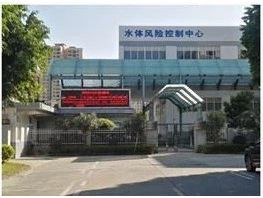
Boluo Tenglong Technology Co., Ltd., established in 2003, is now located in Longxi Environmental Electroplating Industry zone, Boluo County, Huizhou City, which is approved by the national government. The company advocates protecting the environment and benefiting mankind; the plant area is about 10000 square meters, has around 200 skillful workers.


Certifications
The company has passed ISO9001, IATF16949 system certification, and product UL certification; there is a professional technical team and specialized quality control team, supporting excellent management system, and equipped with high-quality management personnel to ensure the company's benign operation, excellent internal.
FAQ
We're professional plastic product molding manufacturers and suppliers in China, specialized in providing the best custom service. We warmly welcome you to buy or wholesale high quality plastic product molding made in China here from our factory.
