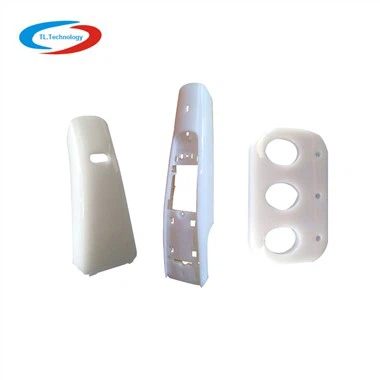
What is Home Appliance Injection Mold Manufacturer
In home appliance manufacturing, precision injection molding has become a crucial technique. It ensures that products have both precise dimensions and consistent repeatability in weight. By leveraging this advanced molding technique, manufacturers can achieve high-pressure, high-speed injections.
Advantages of Home Appliance Injection Molds
Consistent Quality
Home appliance injection mold ensures that the parts produced are of consistent quality. The mold is designed to produce parts that are identical in shape and size, ensuring that the final product is of high quality.
High Production Efficiency
Home appliance injection mold is designed to produce parts quickly and efficiently. The mold is designed to produce several parts at a time, ensuring that the production process is fast and efficient.
Cost-Effective
Home appliance injection mold is cost-effective in the long run. The initial investment cost may be high, but the production process is efficient, ensuring that the cost per part is low.
Design Flexibility
Home appliance injection mold allows for design flexibility. The mold can be designed to produce parts of different shapes and sizes, ensuring that the final product is unique and of high quality.

Home Appliance Plastic Parts Injection Mold Manufacturer
Plastic mold is an abbreviation of a combined mold used for compression molding, extrusion molding, injection, blow molding and low foam molding. The coordinated changes of the mold convex and concave molds and the auxiliary molding system can process a series of plastic parts of different.

Our factory has 25 advanced injection molding machines, automatic manipulators, and high production capacity. Can produce up to 2 tons per day.

Two-Color Plastic Products Twice Molding
Two-shot injection molding: It is a special plastic molding process, also known as overmolding or inlay molding.

Home Appliance Injection Mold Manufacturer
The structure and usage of the mold: It mainly includes a concave mold with a variable cavity composed of a female mold combined substrate, a female mold component and a female mold combined card board, and a convex mold combined substrate, a male mold component, a male mold combined card board.
Why Choose Us
Efficient Communication
Once you send out the inquiry, please pay attention to your email box, since we will reply to your email.
Quality Assurance
We make sure to ship you high-quality, qualified products that are 100% inspected before packaging.
Fast Delivery
For urgent orders, we can coordinate to ship within a week. Usually the delivery time is 15-20 days. For sample, we can ship within 3 days.
Excellent After-sales Service
What we want is a long-term business with you, not just one-time cooperation. So we are responsible to you to the end. Your satisfaction is our goal.
Single Cavity Injection Mold
The single cavity injection mold is the simplest type of mold used in the production of home appliances. It is designed to produce a single part at a time, making it ideal for small-scale production. The mold is made up of a single cavity, which is used to create the desired shape of the part. The single cavity injection mold is cost-effective and easy to maintain, making it a popular choice in the manufacturing industry.
Multi-Cavity Injection Mold
The multi-cavity injection mold is designed to produce multiple parts at a time. It is ideal for large-scale production, as it can produce several parts simultaneously. The mold is made up of multiple cavities, each of which is used to create the desired shape of the part. The multi-cavity injection mold is more expensive than the single cavity injection mold, but it is more efficient in terms of production output.
Family Injection Mold
The family injection mold is designed to produce multiple parts that are related to each other. It is ideal for the production of home appliances that have several parts that are similar in shape and size. The mold is made up of multiple cavities, each of which is used to create a different part. The family injection mold is more complex than the single cavity injection mold and the multi-cavity injection mold, but it is more efficient in terms of production output.
Hot Runner Injection Mold
The hot runner mold is designed to produce parts that require a high level of precision. It is ideal for the production of home appliances that have complex shapes and designs. The mold is made up of a heating system that ensures the plastic material flows smoothly through the mold. The hot runner injection mold is more expensive than the other types of molds, but it is more precise in terms of production output.
Home Appliances Produced Using Injection Mold
Refrigerators are produced using injection mold to ensure that the parts are of high quality and precision. The mold is used to create the body of the refrigerator, the shelves, the drawers, and the doors. The parts are then assembled to create the final product.
Air conditioners are produced using injection mold to ensure that the parts are of high quality and precision. The mold is used to create the body of the air conditioner, the fan, the compressor, and the evaporator. The parts are then assembled to create the final product.
Washing machines are produced using injection mold to ensure that the parts are of high quality and precision. The mold is used to create the body of the washing machine, the drum, the agitator, and the control panel. The parts are then assembled to create the final product.
Microwave ovens are produced using injection mold to ensure that the parts are of high quality and precision. The mold is used to create the body of the microwave oven, the turntable, the control panel, and the door. The parts are then assembled to create the final product.
Vacuum cleaners are produced using injection mold to ensure that the parts are of high quality and precision. The mold is used to create the body of the vacuum cleaner, the motor, the filter, and the hose. The parts are then assembled to create the final product.
Dishwashers are produced using injection mold to ensure that the parts are of high quality and precision. The mold is used to create the body of the dishwasher, the racks, the control panel, and the door. The parts are then assembled to create the final product.
Challenges of Home Appliance Injection Mold
High Initial Investment Cost
The initial investment cost of home appliance injection mold can be high. The cost of designing and creating the mold can be expensive, especially for small-scale production.
Complex Design Requirements
Home appliance injection mold requires complex design requirements. The mold must be designed to produce parts that are identical in shape and size, ensuring that the final product is of high quality.
Maintenance and Repair
Home appliance injection mold requires regular maintenance and repair. The mold must be cleaned and maintained regularly to ensure that it produces high-quality parts.
What Is The Manufacturing Process Of Home Appliance Mold
Design Phase
The process begins with the design phase, where engineers and designers at the Home Appliance Mould Factory collaborate with clients to create detailed blueprints and specifications for the mold. Advanced CAD/CAM software is utilized to develop precise 3D models, considering factors such as product dimensions, material requirements, and parting lines.
Material Selection
Once the design is finalized, the next step is selecting suitable materials for the mold. Factors such as durability, thermal conductivity, and cost-effectiveness are considered. Common materials include steel, aluminum, and various alloys, chosen based on the specific requirements of the home appliance.
Tooling Preparation
With the design and material specifications in place, the factory prepares the tooling necessary for mold production. This involves machining raw materials into the desired shapes and sizes using CNC milling machines, lathes, and other precision equipment.
Mold Construction
The actual construction of the mold begins, typically starting with the fabrication of the mold base and cavity inserts. Skilled technicians meticulously assemble the components, ensuring tight tolerances and proper alignment. Cooling channels are integrated into the mold to facilitate efficient heat dissipation during the molding process.
Surface Treatment
Surface treatment techniques such as polishing, grinding, and coating may be applied to enhance the mold's surface finish and durability. These processes help prevent corrosion, reduce friction, and improve the release of molded parts.
Testing and Validation
Once the mold construction is complete, it undergoes rigorous testing and validation procedures. Quality control technicians inspect the mold for any defects or imsuperbions, ensuring that it meets the specified dimensions and performance criteria. Test runs may be conducted to verify the mold's functionality and compatibility with the intended home appliance.
Production and Delivery
Upon successful validation, the Home Appliance Mould Factory initiates mass production of the molds. Advanced injection molding machines are used to inject molten plastic into the molds, forming the final product. The finished molds are then carefully packaged and delivered to the client, ready for use in the production of home appliances.
Refrigerators are produced using injection mold to ensure that the parts are of high quality and precision. The mold is used to create the body of the refrigerator, the shelves, the drawers, and the doors. The parts are then assembled to create the final product.
Air conditioners are produced using injection mold to ensure that the parts are of high quality and precision. The mold is used to create the body of the air conditioner, the fan, the compressor, and the evaporator. The parts are then assembled to create the final product.
Washing machines are produced using injection mold to ensure that the parts are of high quality and precision. The mold is used to create the body of the washing machine, the drum, the agitator, and the control panel. The parts are then assembled to create the final product.
Microwave ovens are produced using injection mold to ensure that the parts are of high quality and precision. The mold is used to create the body of the microwave oven, the turntable, the control panel, and the door. The parts are then assembled to create the final product.
Vacuum cleaners are produced using injection mold to ensure that the parts are of high quality and precision. The mold is used to create the body of the vacuum cleaner, the motor, the filter, and the hose. The parts are then assembled to create the final product.
Dishwashers are produced using injection mold to ensure that the parts are of high quality and precision. The mold is used to create the body of the dishwasher, the racks, the control panel, and the door. The parts are then assembled to create the final product.
Design Points of Home Appliances Mould
Wall thickness design
The wall thickness of a plastic part is mainly affected by its external dimensions and material. However, in the design of plastic products, maintaining uniform wall thickness is a basic principle. Wall thickness deviations can lead to cosmetic defects in plastic parts, including shrinkage, dents, deformation and internal stress, and ultimately cracks. If the wall thickness is too thin, it will increase the resistance to the flow of molten plastic, hinder the flow of material in the cavity, and make it difficult to fill the material. This results in unfilled areas of the plastic part and reduced strength. Excessive wall thickness is also unfavorable. It will cause bubbles, shrinkage, dents, deformation and other problems in the appearance of the product. Furthermore, thicker products are also heavier, increasing the overall cost. In addition, thicker wall thickness will extend the molding time due to extended holding pressure and cooling time, resulting in lower production efficiency. However, when strength requires local thickness, a gradual transition between thick and thin is required to prevent abrupt changes.
Design of rounded corners and draft corners
Stress concentrations at sharp corners of injection molded housings can lead to brittle failure. Eliminating sharp corners can reduce stress concentration, enhance rib strength, and enhance the product's ability to withstand external impacts. In the design of home appliances, outer arc corners should be used as much as possible to avoid excessive fillet transitions. Generally, the arc size range should be kept between 0.3mm and 0.8mm. Demolding is crucial for smooth demoulding during mold production. Draft angle depends on factors such as part size, wall thickness, shrinkage, and mold cavity surface roughness. Controlling the demoulding angle between 20' and 1°30' can prevent the plastic parts from being difficult to demould due to shrinkage when the mold cavity shrinks continuously.
Reinforcement rib design
Ribs increase the structural strength of plastic parts, reducing the potential for warping, plastic consumption, product weight and production costs without increasing wall thickness. In rib design, strict control of the location, height and uniform distribution of ribs can help avoid cold shrinkage at the bottom of the ribs. Maintaining consistency between rib distribution and melt filling direction aids in the opening and closing of injection molds. The reinforcing ribs adopt arc transitions and the bottoms of the ribs are rounded to improve melt fluidity and reduce stress concentration. Typically, the stiffener is about 50 to 70 percent of the wall thickness, and the bottom R-angle is about 1/8 of the wall thickness.
Materials Used in Home Appliance Mold
Steel
Steel is the most common material used in home appliance injection mold. It is durable, strong, and can withstand high temperatures. Steel molds are ideal for large-scale production, as they can produce several parts at a time.
Aluminum
Aluminum is a lightweight material that is ideal for small-scale production. It is easy to work with and can produce high-quality parts. Aluminum molds are cost-effective and can be used for producing small quantities of parts.
Copper
Copper is a durable material that is ideal for producing parts that require a high level of precision. It is expensive, but it can produce parts that are of high quality and precision.
Brass
Brass is a durable material that is ideal for producing parts that require a high level of precision. It is expensive, but it can produce parts that are of high quality and precision.
Our Factory
Boluo Tenglong Technology Co., Ltd., established in 2003, is now located in Longxi Environmental Electroplating Industry zone, Boluo County, Huizhou City, which is approved by the national government. The company advocates protecting the environment and benefiting mankind; the plant area is about 10000 square meters, has around 200 skillful workers.



Certifications
The company has passed ISO9001, IATF16949 system certification, and product UL certification; there is a professional technical team and specialized quality control team, supporting excellent management system, and equipped with high-quality management personnel to ensure the company's benign operation, excellent internal.
FAQ
Hot Tags: home appliance injection mold manufacturer, China, suppliers, manufacturers, factory, custom, wholesale, buy, made in China