


Plastic Surface Treatment
What is Plastic Surface Treatment
The surface treatment of plastics is to form a surface layer with some or more special properties on the surface of the material through physical or chemical methods. It can improve product appearance, texture, function and other aspects of performance. Appearance: color, pattern, logo, glossy line (3D, 2D).
Benefits of Plastic Surface Treatment
Add safety
With the resistance and durability benefits of plastic-coated and molded safety equipment and PPE, industrial workers are better protected from hazardous materials and dangerous equipment. Better graspability afforded by coatings such as plastisol can also enhance safety with moving parts and controls.
Abrasion Resistance
Abrasion-resistant coatings prevent wear and increase the durability of your product parts. It protects your parts from harsh materials and keeps their performance at the level you expect over time, extending the life of your product.
Offer dielectric insulation
Insulation protection against contact between parts and with people can be achieved with plastic coatings such as epoxy powder and plastisol. Tools and equipment can also be coated to minimize the risk of contact with electricity.
Low Friction
The surface coating reduces friction, keeping your product surfaces lubricated and preventing wear. It minimizes maintenance, extends product life, and maintains product aesthetics.


Product Categories
Latest Products


Why Choose Us
Efficient Communication
Once you send out the inquiry, please pay attention to your email box, since we will reply to your email
Quality Assurance
We make sure to ship you high-quality, qualified products that are 100% inspected before packaging.
Fast Delivery
For urgent orders, we can coordinate to ship within a week. Usually the delivery time is 15-20 days. For sample, we can ship within 3 days.
Excellent After-sales Service
What we want is a long-term business with you, not just one-time cooperation. So we are responsible to you to the end. Your satisfaction is our goal.
Introduction Of Surface Treatment Technology For Plastic Products
With the continuous improvement of plastic processing and modification technology, the application field has expanded rapidly. Different applications have increasingly increasing performance requirements for plastic surface decoration, material protection, and improved adhesion. However, the structure and components of various plastic materials are different, and the corresponding surface properties are also significantly different. Various surface treatment technologies and products adapted to different applications came into being.
To meet the different needs of plastic surface treatment, a variety of treatment technologies have been developed. Commonly used technologies are: solvent cleaning (degreasing), corona treatment, short-wave ultraviolet radiation treatment, sandpaper treatment, sandblasting treatment, plasma etching, chemical etching, heating treatment, etc. For different materials, it is often necessary to choose different processing methods.
Selection of surface treatment methods Due to the low surface energy of most plastics, many treatment methods, such as decoration, printing, and spray coating, cannot be directly applied, and surface treatment is required first. The adhesion of plastics to various materials is a key issue to be solved in surface treatment. Generally speaking, the adhesion properties of plastics are related to the material structure and composition.
Surface Treatment Process of Plastic Products
Chassis paint
The main effect of the chassis paint is to make the plastic products look shiny like metal. Many plastic products are very hard, and their hardness can even be compared with metal. No difference.
Electroplating
Usually, it is a kind of pigment for electroplating silver. It is non-toxic but the effect of electroplating is very good. The surface of the product looks shiny, which is very suitable for the surface treatment of plastic products similar to PC and ABS materials.
Rubber spray-coating
After the paint is attached to the surface of the plastic product, the product will feel very elastic and soft, and at the same time, the product can have anti-pollution and anti-solvent functions.
Conductive paint
Through this method, plastic products can be used as metals in many projects. After being treated with conductive paint, the surface of the plastic products has functions such as electrical conductivity and magnetic conductivity. At the same time, this resistance value can be specially made according to special requirements. Now it has been obtained It is widely used, and the most representative ones are the surface treatment of PC and ABS products.
Pearl powder
Pearlescent powder is often used in transparent or translucent plastics, making it attractive in color. It is widely used in cosmetic containers, various types of packaging, toys, decorative materials, films and other plastic products. Due to its high temperature resistance and non-toxicity, it can also be used in the production of lipsticks, eye shadows, foundations, liquid eyeliners and other cosmetic fields. In addition, pearlescent coatings are also widely used in automobiles, building materials and other fields, making them appear pearlescent and metallic.
Luminous paint
It is conceivable that it refers to a pigment that makes plastic products visible in the dark. This method often makes the surface of plastic products very attractive, especially at night.
Laser
Many people have come into contact with Laser's surface treatment methods, such as granite engraving and steel plate engraving. This method is also commonly used in the surface treatment of plastic products.
Chameleon
The word chameleon comes from the fact that it can make the surface of plastic products look colorful, very dazzling and eye-catching, which can greatly improve the cost performance of products. This method of surface treatment of plastic products is deeply loved by consumers!
Texture
Texture is to corrode the mold to produce serpentine, etched and other textures. After the plastic product is formed by the mold, the surface will have corresponding textures. That is, we often see rough graininess or some special lines on the surface of the product.
Spray paint
Let the products show different colors, but many products adjust the color of the products through plastic materials.

The Adhesion between plasma-modified polyethylene (PE) and different polar polymers, as well as aluminium and steel, has been studied. The PE was modified by either oxygen plasma treatment or plasma polymerization of acrylic acid. The result show the importance of introducing polar groups on the surface of the non-polar PE in order to improve the adhesion to polar polymers as well as metals. Laminates made of plasma-modified PE ad polyamide 6 (PA-6) or poly(ethylene vinyl alcohol) (EVAL-G) showed failure in PA-6 or EVAL-G when delaminated. Poly(ethylene terephthalate) (PET), which is not as polar as PA-6 or EVAL-G, showed an adhesive failure when the PE was treated with either of the plasma methods. However, when both the PET and the PE were modified, the failure occurred in the PET upon delamination. Oxygen plasma treatment of PE resulted in an increased adhesion when laminated with cellophane, with no observed material failure. The laminates composed of plasma-modified PE and aluminium or steel showed cohesive failure in the PE.
Surface Treatment of Plastic Products and Its Gloss Detection
Pre-treatment of coating
The pre-treatment includes degreasing treatment of the plastic surface, that is, oil stain and mold release agent for cleaning the surface and activation treatment of the plastic surface. The purpose is to improve the adhesion of the coating.
● Degreasing of plastic products.
● Surface activation of plastic products.
Among them, the chemical crystal oxidation treatment method is most widely used. This method commonly uses a chromic acid treatment solution. Its typical formula is 4.5% potassium dichromate, 8.0% water, and 87.5% concentrated sulfuric acid (more than 96%).
Some plastic products, such as polystyrene and ABS plastic, can also be directly coated without chemical oxidation treatment.
Pretreatment of plating
The purpose of the plating pre-treatment is to improve the adhesion of the plating to the plastic surface and to form a conductive metal bottom layer on the plastic surface.
The pretreatment process mainly includes: mechanical roughening, chemical degreasing, chemical roughening, sensitization treatment, activation treatment, reduction treatment and chemical plating. The first three items are to improve the adhesion of the coating and the last four items are to form a conductive metal bottom layer.
Surface gloss testing of plastic products
The purpose of testing the plastic gloss is to evaluate the quality of the product based on data inspection and to indicate whether the production conditions are related to the surface gloss of the material. The refractive index range of plastic is approximately 1.4 ~ 1.6 and the gloss is generally within the range of 70 ~ 110 gloss. However, the reflective conditions of transparent plastics and translucent plastics are different and cannot be generalized. A 60 ° gloss meterLS191 can be used to measure and evaluate the gloss of plastics.
Adhesion, whether the bonding of polymers or the adhesion of coatings to polymer surfaces, is a recurring and difficult problem throughout the plastics industry. This paper introduces a proven, yet relatively unknown technology which provides an efficient, economic and versatile solution to adhesion problems: cold gas plasma surface treatment. Through plasma processing, it is possible to re-engineer the furface chemistry of any polymer to maximize its adhesive qualities. The result is optimum performance, even from inexpensive materials, and maximum flexibility in design decision-making.

What Are the Challenges of Plating on Plastic
Etching
The etching process was developed in the 1960s to promote adhesion when plating acrylonitrile butadiene styrene (ABS), a polymer that is used in the manufacturing of various automotive products, medical devices, electronic assemblies as well as household and consumer goods. Etching entails the application of a chromic acid-based solution to remove the butadiene component from the resin, which facilitates bonding with the metallic coating.
Electroless plating
Electroless plating is an alternative form of plating that relies on an autocatalytic chemical reaction instead of electricity to apply the coating. Nickel and copper are the materials that typically serve as the base metal for the electroplating process. This technique also provides a uniform coating and enables the plater to control the coating thickness more efficiently.
Corona discharge
A corona discharge is a physical process that generates ionized air, which reacts with the plastic surface to develop free radicals. The radicals subsequently react with the oxygen in the atmosphere to increase the plastic substrates surface energy and promote bonding.
Flame treatment
The flame treatment technique introduces the plastic surface to a gas flame, which results in oxidation and increases surface energy. This technique must be implemented with extreme caution — exposing the substrate to the flame for more than a few seconds will cause warping.
Plasma treatment
Plasma treatments are executed under a partial vacuum. They entail the activation of a gas plasma which produces “excited species” that react with the surface of the substrate. This technique typically promotes better surface stability than other chemical or physical treatment processes.
Removal of internal stress
Plastic products are prone to internal stress during molding and injection, and stress concentration can easily occur during the coating process, causing cracks in plastic parts. Flame or full face treatments can be used to relieve stress. Flame treatment provides fast, direct repair (commonly used for painting bumpers and other automotive parts). We can also heat the plastic parts below the heat distortion temperature, which is 60℃, and keep it for 2 hours. This process requires a large-size baking line, so full surface treatment technology can be used, that is, a liquid solution that can eliminate the internal stress of the plastic at room temperature for 15 to 20 minutes. Be sure to dry completely before loading into the coating machine.
Decontamination
The surface of the plastic parts is often stained with oil, hand sweat and mold release agent, which will make bad contact between paint and product, and the coating will crack, blister and fall off. Degreasing treatment should be planned before painting. Plastic parts are usually cleaned with gasoline or alcohol, then chemically degreased. Residual lye on product surface should be thoroughly cleaned with pure water then dry up. Depends the surface condition, we may use different cleaning agent with their own process
High-pressure ion air removal and dust removal
Plastic parts are insulators, and their surface resistance is generally around 1013Ω, which can easily generate static electricity. After charging, it is easy to absorb fine dust particles in the air and stick to the surface. Due to electrostatic adsorption, it is difficult to remove dust with ordinary air blowing methods. It is recommended to use high-pressure ionized air flow to remove and exhaust dust.
Paint adhesion problem
Plastic materials such as nylon and PP have high surface crystallinity and low polarity. When spraying ordinary paints such as rubber paint and PU paint, the adhesion between the base material and the paint is poor, and paint peeling off is easy to occur. To solve this problem, we can spray an adhesion promoter before painting. The function of this accelerator is to destroy the molecular arrangement on the surface of the substrate, increase the dyne value, and ultimately solve the adhesion problem.
Our Factory
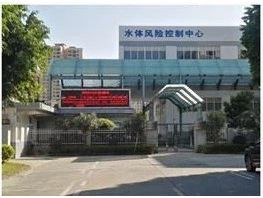
Boluo Tenglong Technology Co., Ltd., established in 2003, is now located in Longxi Environmental Electroplating Industry zone, Boluo County, Huizhou City, which is approved by the national government. The company advocates protecting the environment and benefiting mankind; the plant area is about 10000 square meters, has around 200 skillful workers.


Certifications
The company has passed ISO9001, IATF16949 system certification, and product UL certification; there is a professional technical team and specialized quality control team, supporting excellent management system, and equipped with high-quality management personnel to ensure the company's benign operation, excellent internal.
FAQ
We're professional plastic surface treatment manufacturers and suppliers in China, specialized in providing the best custom service. We warmly welcome you to buy or wholesale high quality plastic surface treatment made in China here from our factory.
