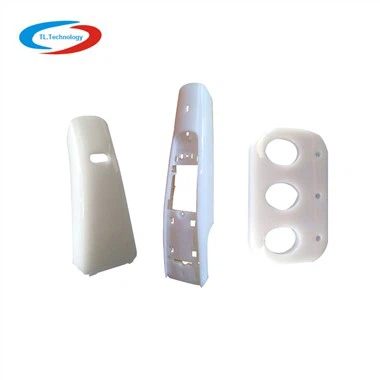
What is Plastic Injection Products
Use of plastic injection moulding products is commonplace in automotive manufacturing. Components are widely used in cars, vans and lorries, as well as other modes of transport such as boats and aeroplanes. They are used to make such components as bumpers, fenders, door handles, dashboards, glove boxes and air vents.
Benefits of Plastic Injection Products
Cost-Effective Mass Production
Plastic injection molding is highly efficient for mass-producing plastic parts. It can produce a large volume of identical parts with minimal material waste, which makes it cost-effective for high-volume production runs.
Precision and Consistency
Injection molding provides high levels of precision and repeatability. Complex and intricate parts can be molded with tight tolerances, ensuring consistency across all parts. This is especially important in industries like automotive, aerospace, and medical devices.
Wide Material Selection
Injection molding supports a wide range of thermoplastic and thermosetting materials, allowing manufacturers to choose materials with the specific properties they need, such as strength, flexibility, heat resistance, or transparency.
Reduced Labor Costs
Once the injection mold is set up and optimized, the process is highly automated, which reduces the need for extensive manual labor. This can result in significant cost savings over time, particularly for large production runs.
Design Flexibility and Complexity
Injection molding enables the production of complex and intricate part designs, including features like undercuts, overhangs, and varying wall thicknesses. It also allows for the integration of multiple components into a single part, reducing the need for assembly.

Home Appliance Plastic Parts Injection Mold Manufacturer
Plastic mold is an abbreviation of a combined mold used for compression molding, extrusion molding, injection, blow molding and low foam molding. The coordinated changes of the mold convex and concave molds and the auxiliary molding system can process a series of plastic parts of different.

Home Appliance Injection Mold Manufacturer
The structure and usage of the mold: It mainly includes a concave mold with a variable cavity composed of a female mold combined substrate, a female mold component and a female mold combined card board, and a convex mold combined substrate, a male mold component, a male mold combined card board.

Two-Color Plastic Products Twice Molding
Two-shot injection molding: It is a special plastic molding process, also known as overmolding or inlay molding.

Our factory has 25 advanced injection molding machines, automatic manipulators, and high production capacity. Can produce up to 2 tons per day.
Why Choose Us
Efficient Communication
Once you send out the inquiry, please pay attention to your email box, since we will reply to your email.
Quality Assurance
We make sure to ship you high-quality, qualified products that are 100% inspected before packaging.
Fast Delivery
For urgent orders, we can coordinate to ship within a week. Usually the delivery time is 15-20 days. For sample, we can ship within 3 days.
Excellent After-sales Service
What we want is a long-term business with you, not just one-time cooperation. So we are responsible to you to the end. Your satisfaction is our goal.
Application of Plastic Injection Moulding Products
Packaging
The food and drinks industry uses plastic injection moulded products for packaging such as trays, boxes, shrink wrap, bags and protective layers. They are lightweight, hygienic and can be hermetically sealed to keep the contents contamination-free. The versatility of the end products also make the plastics useful for rigid packaging, point of sale and advertising materials. Other things that can be packaged in this way include tobacco, electrical appliances, toys, clothing and electronic devices.
Medical and healthcare
Uses for plastic injection moulding products across the medical and healthcare sectors is vast. Here, the materials are prized for their hygienic surfaces and ease of cleaning, their versatility and their resistance to bacteria and germs.
Examples of medical and healthcare products include syringes, vials, petri dishes, diagnostic devices and medication bottles. Also PPE, surgical equipment, implantable devices and stents.
Textiles
Plastic injection moulding products in the fast-moving textiles industry include tape strapping, plastics ropes and twines, sports clothing shoes and bags, sunglasses, watch straps, tote bags and beach shoes. The plastics offer good colour fastness, waterproofing and resistance to fading from UV rays from the sun or damage from bacteria mould and heavy usage when being worn, carried or used.
Automotive, transport and logistics
Use of plastic injection moulding products is commonplace in automotive manufacturing. Components are widely used in cars, vans and lorries, as well as other modes of transport such as boats and aeroplanes.
They are used to make such components as bumpers, fenders, door handles, dashboards, glove boxes and air vents. Their engine also makes good use of them, e.g. for cylinder head covers and oil gauges.
Electronics
The electronics sector uses plastic injection moulding products for several different applications This is because the finished products can be designed to highly bespoke specifications, with a huge choice of finishes, textures, shapes and colours. They offer good insulating properties too. Some uses for plastic injection moulding products in the electronics sector include smartphone and tablet components, battery casings, printed circuit boards and charging devices.
Industry and construction
The construction industry uses plastic injection moulded products for both large and small applications. So, they can be found inside heavy-duty machinery and furniture, as well as in decorative fixtures, fittings and tools.
Plastics are also useful for heavy-duty packaging to protect construction materials or industrial equipment before it is put into use. Warning and other signage is also often made using plastic injection moulding techniques for maximum impact.
Properties to Consider When Selecting Injection Molding Materials
There are several important properties to consider for selecting injection molding materials for any plastic product. These include the desired tensile strength, flexural modulus (bending stiffness), Izod impact (toughness), electrical insulation, temperature resistance, chemical resistance, FDA compliance, and cost of the final product.
The first property to consider when selecting injection molding materials is the product' s desired tensile strength. Tensile strength is the resistance to being pulled apart, typically measured in PSI (pounds per square inch). Similarly, another material property to consider is Izod impact (notched) or toughness. The Izod impact test is an ASTM standard method of determining the impact resistance of materials. This is done by swinging an arm into the notched sample, recording the energy required to break the part, which is measured in ft·lb/in2.
Another property to consider when selecting your plastic material is the material' s flexibility or bending stiffness. Also known as flexural modulus, the material' s stiffness is measured in psi. Next, is electrical insulation properties, or dielectric strength. Typically measured in volts per micrometer (v/mil), to determine how well the plastic part will prevent the flow of electrical charge. While these are accurate for certain standards, sometimes we have to use metric units due to the material info we are given, or doing tests in other standards (ISO or DIN for example).
Chemical resistance is also important because this will determine how well the plastic can resist being degraded by certain chemicals better than others. For example, gasoline will melt polystyrene (basically making napalm), but not polyethylene (which plastic gas cans are made of). Therefore, it is important to identify what the finished product will come in contact with and pick a compatible material. Along this note, FDA compliance is an important factor when dealing with medical or consumer products that must be approved for human contact.
How the injection molding material reacts to heat is important to consider when comparing thermoplastic materials. The thermal properties will determine the max and min working temperature, the melting temperature, and can determine how the material will react in the mold and as it cools. Injection molding pressure and flow rate of material can cause shrinkage and dimensional instability if not chosen carefully.
Cost is important for obvious reasons and can change in numerous ways, from availability, and material properties, to the use of material additives. If multiple plastic materials will meet your property requirements then cost may be the determining factor to produce your product to your specifications.
What Are the Major Factors Affecting an Injection Moulding Process
Material being used
The selection of the right material for injection molding is essential to ensure reliable production.
Whether it be plastic with low melt temperatures, viscosity, or shrinkage rate; each chosen element must have properties that can withstand rigorous applications and deliver optimal strength and durability while in its injection molded form.
Choosing the correct material plays an integral role in determining how successful your project will become!
Design of the mold
Precise design of the injection mold is essential in crafting reliable parts.
It determines where molten material will flow and assigns it a specific size, allowing for highly accurate part production with no variation between iterations.
By getting these details right early on, your team can save time later through streamlined process management during manufacturing.
Injection molding machine
To ensure high-quality, accurate parts are produced through injection molding, the machine responsible for injecting must be up to par.
It needs to generate correct pressure and temperature levels as well as have sufficient capacity in terms of size and complexity; able to accommodate both the scope of material used and intricacy needed from an injection mold.
Operating conditions
The operating conditions of the injection molding machine can also have a significant impact on the injection molding process.
The mold temperatures and plastic pressure of the molten material, the speed and force of the injection, and the cooling rate of the mold all play a role in the quality and accuracy of the final parts.
The maintenance and upkeep of the injection molding machine can affect the process, as wear and tear on the machine can cause defects or downtime.
Other factors that can affect the plastic injection molding complex process include the type and quality of the raw materials, the environmental conditions in the production facility, and the skill and experience of the operator.
How to Reduce Part Weight in Plastic Injection Molding
Make parts thinner
This seems easy to do, but you will need to verify that thinner parts still incorporate the other qualities required for the design. You will need to monitor heat tolerance, strength, fatigue resistance, etc. to ensure you don' t lose the value of the product by moving to a thinner component.
Change materials
Changing materials may not be a simple task, but it can greatly benefit the parts over time. Assuming your part must stay the same size, you can change the molding resin to a material with less density per volume. The molded component will then stay the same shape and size (keeping the same volume of material used), but it will be lighter. This again will need to be verified that it does not affect the other qualities required of the component.
Redesign the part
There are ways to redesign the part and keep key characteristics required by the design. You may be able to reduce the wall thickness of the part and add features such as strengthening ribs to keep the required strength of the part. Beyond that you may adjust or add radii on corners to slightly reduce the volume of the material in the part. One last way to reduce material use, and reduce the weight of the component, is to add holes in the component in areas that would affect the part for strength. Less material volume reduces weight.
Adjust the cycle time and parameters
Adjusting the cycle time and molding parameters will take some testing and validation to ensure the part weight is being reduced while other characteristics are staying within their design range. Every molding material is slightly different, but changing the barrel temperature, increasing or decreasing the injection pressure, and varying the temperature within the injection mold may yield slight reductions in part weight that can add up to significant savings in a long run of parts.
Change the molding process
You may consider this change close to changing the material, but you may be able to change the process from a standard injection molding to a foaming co-injection molding process. Your part may change from a uniform solid density to a foam core with a solid skin. A second process method to consider could be gas or fluid assisted molding. This could offer hollow parts with a solid outer skin. Fluid assisted parts could also benefit from reduced cycle times as the fluid can assist with part cooling inside the injection mold.
Properties of Injection Moulding Materials
|
Moulding Materials |
Max Temp |
Chemical resistance |
Tensile strength |
Flexural strength |
Impact strength |
|
Acrylonitrile Butadiene Styrene (ABS) |
60 – 93℃ |
Poor to fair |
6,600 psi |
270,000 – 380,000 psi |
3.0 – 7.5 ft-lb/in |
|
Nylon |
93 – 177℃ |
Good to excellent |
6,000 – 24,000 psi |
390,000 – 1,100,000 psi |
2 – 8 ft-lb/in |
|
High density Polyethylene (HDPE) |
120℃ |
Good to excellent |
3,200 – 4,500 psi |
145,000 – 225,000 psi |
0.4 – 4 ft-lb/in |
|
Low density Polyethylene (LDPE) |
65 – 90℃ |
Good to excellent |
1,200 – 4,000 psi |
35,000 – 48,000 psi |
Not breakable ft-lb/ in |
|
Polycarbonate (PC) |
288 – 316℃ |
Poor to fail |
8,500 psi |
13,500 psi |
2 – 18 ft-lb/in |
|
Polyoxymethylene (POM) |
180 – 230℃ |
Excellent |
6,000 – 22,000 psi |
120,000 – 170,000 psi |
0.8 – 2 ft-lb/in |
|
Acrylic (PMMA) |
130℃ |
Excellent |
2,800 – 10,900 psi |
13,000 psi |
0.22 – 1.1 ft-lb/in |
|
Thermoplastic Polyurethane (TPU) |
71-121℃ |
Fair to good |
6,960 – 12,000 psi |
0.8 – 10.1 ft-lb/in |
|
|
Thermoplastic Rubber (TPR) |
170℃ |
Fair to good |
1,000 – 7,000 psi |
5,000 – 800,000 psi |
2.5 – no break ft-lb/in |
|
Polypropylene (PP) |
65 – 148℃ |
Excellent |
4,500 – 18,500 psi |
210,000 – 1,500,000 psi |
1.4 – 5.5 ft-lb/in |
How Injection Molding Is Performed
The Basics of Injection Molding
Injection molding is a molding process used in the manufacturing industry to create plastic components and parts. It requires the use of a special machine, known as an injection molding machine, that contains all the necessary elements for this molding process. The injection molding machine features a hopper, a heater, a reciprocating screw, a nozzle and a mold. With these elements, it's able to convert plastic pellets into components and parts featuring the shape of the mold's cavity.
Feeding the Plastic Pellets Into the Injection Molding Machine
To perform injection molding, manufacturing companies feed plastic pellets into an injection molding machine. The top of the injection molding machine features a hopper with a large opening. As the plastic pellets are fed into the hopper, they fall into the machine's reciprocating screw where they are heated. Heat, of course, causes the plastic pellets to liquefy. The hot, melted plastic is then guided into the mold cavity. The reciprocating screw guides the liquefied plastic into the mold cavity.
Closing the Mold Cavity
After the mold cavity has been filled with an appropriate amount of liquefied plastic, it's closed. This allows the mold cavity to maintain pressure, thereby preventing the finished component or part from shrinking.
Waiting for the Plastic to Cool
Once the mold cavity has been filled with liquefied plastic, it's allowed to sit at room temperature for a given amount of time to cool and harden. As the heated plastic pellets cool, they harden while subsequently taking the shape of the mold cavity.
Removing the Finished Component or Part from the Mold Cavity
The final step in injection molding involves the removal of the finished plastic component or part from the mold cavity. Depending on the type of injection molding machine used, manufacturing companies may be able to "eject" the finished component or part. Alternatively, they may have to manually remove it. Regardless, all injection molding processes conclude with the removal of the finished component or part from the mold cavity.
Injection molding cost can range anywhere from $100 to $100,000+ depending on the scope and intricacy of the project. A small and simple single-cavity plastic injection mold usually costs between $1,000 and $5,000. Very large or complex molds may cost as much as $80,000 or more.
Our Factory
Boluo Tenglong Technology Co., Ltd., established in 2003, is now located in Longxi Environmental Electroplating Industry zone, Boluo County, Huizhou City, which is approved by the national government. The company advocates protecting the environment and benefiting mankind; the plant area is about 10000 square meters, has around 200 skillful workers.



Certifications
The company has passed ISO9001, IATF16949 system certification, and product UL certification; there is a professional technical team and specialized quality control team, supporting excellent management system, and equipped with high-quality management personnel to ensure the company's benign operation, excellent internal.
FAQ
Hot Tags: plastic injection products, China, suppliers, manufacturers, factory, custom, wholesale, buy, made in China