The principle of the physicochemical method to treat electroplating wastewater
The physical and chemical method is the use of ion-exchange or membrane separation or adsorbents and other methods to remove impurities contained in electroplating wastewater, which is widely used in industry and usually used in conjunction with other methods.
1、Ion exchange method
The ion exchange method is a method of separating harmful substances from wastewater using ion-exchange agents. The most commonly used exchange agent is ion exchange resin, and the resin can be regenerated with acid and alkali after saturation and used repeatedly. Ion exchange is achieved by ion exchange between the ions carried by the exchange agent itself, which can move freely, and the ions in the solution to be treated. In most cases, the ions are first adsorbed and then exchanged, with a dual effect of adsorption and exchange. For wastewater containing heavy metal ions such as chromium, Cr(VI) can be removed with anion exchange resins and Cr(III), iron and copper ions can be removed with cation exchange resins. It is generally used to treat wastewater with low harmful substance content and has the advantages of recycling, turning harm into profit, and recycling water, but it has high technical requirements and large one-time investment.
2、Membrane separation method
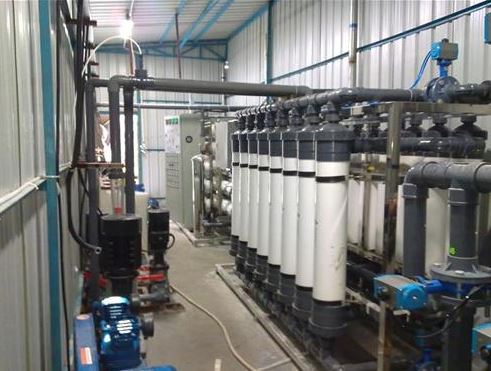
Membrane separation refers to the use of semi-permeable membranes as a barrier layer, with the help of membrane selective permeation, in the role of energy, content, or chemical potential difference to the different components of the mixture for separation. Using membrane separation technology, heavy metals, and water resources can be recovered from electroplating wastewater, reducing or eliminating its pollution of the environment and realizing clean production of electroplating. For electroplating wastewater with high added value such as gold, silver, nickel, and copper, membrane separation technology can achieve closed circuit recycling and generate good economic benefits. For comprehensive electroplating wastewater, after simple physical and chemical treatment, membrane separation technology can be used to reuse most of the water, the recovery rate can reach 60% to 80%, reducing the total discharge of sewage and cutting the pollutants discharged into the water body.
3、Evaporation and concentration method
This method is to evaporate the electroplating wastewater so that the heavy metal wastewater can be concentrated and recycled as a treatment method, generally applicable to the treatment of electroplating wastewater containing chromium, copper, silver, nickel, and other heavy metals. It is generally used as an auxiliary treatment to other methods. It has the disadvantages of high energy consumption, high cost, large floor space, and high operating cost.
4、Activated carbon adsorption method
The activated carbon adsorption method is an economic and effective method for treating electroplating wastewater, mainly used for wastewater containing chromium and cyanide. It is characterized by mild treatment regulation, safe operation, and reuse of the deeply purified treated water. However, the method has the problems of complicated regeneration of activated carbon and the regeneration solution cannot be directly returned to the plating tank, and the adsorption capacity is small, which is not suitable for wastewater with high content of harmful substances.