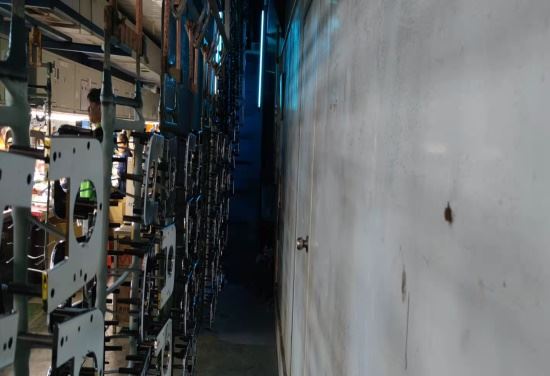
Plastic water plating is a method of adding a layer of metal to a conductor using the principle of electrolysis.
What is electroplating
Electroplating refers to a surface treatment method for decorative plastic parts, the metal to be plated on the surface of plastic, and the cations of the metal to be plated in the plating solution are deposited on the surface of the base metal through electrolysis to form a plating layer. The performance of the coating metal is different from that of the base metal and has new characteristics. According to the function of the coating, it is divided into the protective coating, decorative coating, and other functional coatings. In short, it is a process of using electrolysis to attach a multilayer metal film to the surface of the plastic.
The role of electroplating
After electroplating, the surface of the product can play a role in preventing corrosion, improving wear resistance, conductivity, reflectivity, and enhancing aesthetics. With the continuous progress and development of society, electroplating products are used in the electronics industry, national defense scientific research, household appliances, automobiles, and sanitary ware. Products and even daily necessities have been widely used and unanimously praised.
The principle of electroplating
In electroplating, the part to be plated with a conductive surface is used as the cathode, and the plated metal or insoluble material is used as the anode. The process is immersed in an electrolyte containing plated metal ions and applied with direct current to deposit the plated metal on the plated part. It is called electroplating, and its principle is that electrochemical oxidation and reduction reactions occur on the anode and cathode.
Main reaction:
Anode: Zn-2e=Zn2+ oxidation reaction, metal dissolution
Cathode: Zn2++2e=Zn reduction reaction to form a coating
Sub reaction:
Anode: 4OH--4e=2H2O+O2
Cathode: 2H++2e=H2
The electroplating process of plastic water electroplating
Material inspection-hanging-chemical degreasing-washing water-coarsening 1-coarsening 2-reduction-presoaking-sensitization-degumming-electroless nickel plating-pickling- —Copper—Pickling—Copper Plating—Pickling—Semi-gloss Nickel Plating—Nickel Plating—Chromium Plating—Drying—Down Hanging—Quality Inspection Packaging
The basic process of the electroplating
Electroplating has different plating types, different requirements, and different process flow. However, to design a complete electroplating process flow, three stages must be included:
The first stage: pre-treatment for electroplating
All processes before electroplating are collectively called pretreatment, including degreasing, removing oxide film, removing rust, cleaning, etc. Its purpose is to remove oil stains, oxide film, rust, etc. on the surface of the workpiece so that the coating is firmly combined with the substrate, and a coating with good bonding force is obtained.
The second stage: electroplating
Obtaining a variety of coatings that meet the requirements of each link is the core procedure of the entire process. It is a method of laying a layer of metal on a conductor using the principle of electrolysis. Electroplating refers to a surface processing method that uses the base metal to be plated as a cathode in a salt solution containing pre-plated metal to deposit the cations of the pre-plated metal in the plating solution on the surface of the base metal through electrolysis to form a plating layer. . The thickness of each electroplated layer determines the key to each performance test and appearance.

The third stage: post-plating treatment
Including cleaning (must be done with pure water when cleaning), decontamination, passivation, sealing, drying (the temperature during drying cannot be higher than the temperature of the plastic Bunsen, which is 60 degrees), etc. The purpose is to obtain different colors Cleanliness and performance.