


Analysis on the advantages of plastic plating-Aluminum plating Mould.
Huizhou Boluo Tenglong Technology Co., Ltd. serves you wholeheartedly! Mainly engaged in plastic hydroelectroplating processing, with plastic injection molding processing, mold processing and so on!
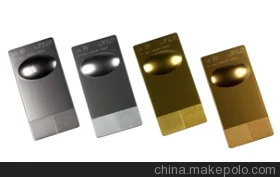
Aluminum mold is a hot topic that people in the mold industry are very concerned about. Using aluminum as a cost-effective method to produce moulds has many advantages, which can further improve the competitiveness of enterprises. Due to the obvious advantages, the mold manufacturing cycle is shortened, thus reducing the production cost, coupled with the better thermal conductivity of the mold, which means that the production cycle can be greatly shortened. In a word, it is appropriate for people who consider using this kind of mould to discuss the problem of electroplated aluminum mould.
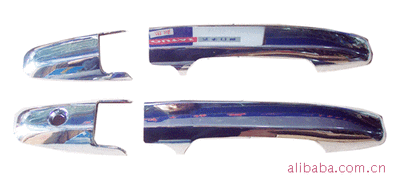
The application of aluminum mold to injection molding process is not entirely a new concept. At first, prototype moulds are generally made of aluminum, and this kind of mold has been used in the automotive industry for many years, and now it has gradually become popular in enterprises outside the automotive industry.
More and more customers have asked such a question: how to prolong the service life of these moulds so that they can be applied to limited production? With the development of this trend, customers begin to explore the use of aluminum moulds as a real production tool, and even ask more questions, such as:

(1) what is the level of the final surface finish that the mold may need to be electroplated in order to better release the parts?
(2) does it require a paper-like surface finish or a diamond-like surface finish? Does it need shot peening and polishing?
(3) what requirements need to be met to prevent corrosion and wear?
All these questions should be well answered before processing the mold.
Due to the development of new technology and aluminum templates, especially for the design of injection moulds, aluminum moulds are more and more widely used in blow moulds and R.I.M. Molds, rubber molds, structural foaming moulds and R.T.M. Modules and other fields. Although it may not be suitable for all applications, in fact, its use is becoming more and more common.
Everyone hopes to extend the production life of the mold, such as using traditional tool steel, whose surface is electroplated with hard chromium or nickel metal, or using a more specialized engineering coating, which can prevent its surface from wear or corrosion and promote its better demoulding. Since then, in order to seek the same goal, aluminum moulds have been used and practical solutions have been found.

In order to be able to produce decorative parts by injection molding, in addition to prolonging the service life of the mold, the manufacturer also hopes that the surface of the aluminum mold can maintain a certain degree of gloss, so it is recommended to use non-electroplating nickel spraying process, because this method helps to prolong the life of mold surface finish, making it relatively easy to produce decorative parts.
Because the texture of aluminum is soft, if the surface coating is not used, it is easy to be worn by plastic and accelerate its damage, thus changing the glossiness of injection molded parts. Non-electroplated nickel coating can add 50RC to the mold surface, making it sufficient to protect and prolong the glossiness and structure of the mold surface. In the view of mold expert Luo Baihui, non-electroplated nickel coating can obtain better surface finish than aluminum itself, but it must be pointed out that some surface treatment is needed before the mold can be electroplated. For example, in order to reach the level of lens quality, it is recommended that the surface of the aluminum mold be machined to the level of SPIA-3 finish, and then, before further polishing, a high phosphorus non-electroplated nickel coating of 0.0003 to 0.0005 is applied to make it reach the finish level of diamond quality.
On the other hand, this process saves a lot of time and cost. Under normal circumstances, aluminum also brings a variety of defects, but it is often invisible to the naked eye, and it can only be clearly seen on the injection molded parts, which will inevitably lead to a waste of materials and the time to return to the test-bed to re-test to analyze and correct the problems. The non-electroplated nickel coating will help to eliminate these defects or minimize them before the mold is put into production.
Because the non-electroplated nickel coating is uniformly deposited on all surfaces of the mold, it will fully cover the entire part, including all threaded holes and pin holes, which actually improves the structural integrity of the aluminum mold. Another advantage is that the application of non-electroplated nickel coating will not affect the properties of aluminum because it is used at a low temperature of 180 ℃.
Mr. David Bank, president of Aluminum Injection Mold, is one of the advocates of aluminum moulds. He likes to use boron-nickel nitride coating on aluminum molds. "I use boron-nickel nitride coating for two reasons: first, the mold can achieve wear resistance when it is used to process a lower percentage of glass filling materials; second, when the mold is used to process materials such as PVC, it can play a role in anti-corrosion." Mr. Bank said, "in both cases, the use of several coated moulds can be a great success. The application effect of boron-nickel nitride coating is very good, and it has a good affinity with aluminum, but it can be peeled off if necessary. No matter what reason you choose the coating, choosing the boron-nickel nitride coating is a very reliable strategy. "
If corrosion is a concern, then the use of nickel-polytetrafluoroethylene coatings, boron-nickel nitride coatings and non-electroplated nickel coatings will have the best anti-corrosion effect. After using any of the above engineering coatings, it is no longer necessary to spray other protective and anticorrosive coatings on the mold during the shutdown period.
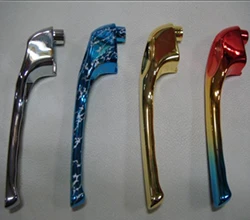
Waterlines can also benefit from non-electroplated nickel coatings on aluminum moulds. If used, there is no need to worry about the shrinkage of the waterline or a white coating similar to a scale, which can reduce the processing cycle because the electroplating material can actually eliminate these problems. Therefore, as long as the plug is not pulled out of the mold before application, the waterline will be covered by the spray coating after the whole mold is sprayed.
In 50RC, the non-electroplated nickel coating sprayed directly can play a general role of anti-wear protection, but the best protection can be obtained by PVC gas; nickel-PTFE coating can protect against 50RC.


