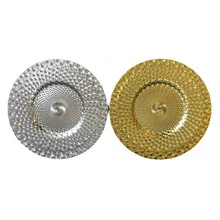
Using ABS plastic plating has the following advantages:
It can make the surface of plastic products have metallic luster, beautiful, and decorative effect.
Improve the mechanical strength of the product surface and extend its service life;
Make plastic products highly stable to external factors such as light and atmosphere, and not easy to age;
Make plastic conductive, magnetic, and weldable.
The main process flow of ABS plastic electroplating is: degreasing, roughening, sensitization, activation, chemical plating, electroplating, nickel plating, chromium plating, and finished product. In the above operations, the five steps before the electroplating operation are the electroless plating process, and starting from the electroplating operation is the conventional electroplating process.
The main process flow of ABS plastic electroplating
1. Degreasing
The main purpose of degreasing is to degrease and remove oil while reducing its surface tension and making its surface hydrophilic. During the processing or transportation of parts, it is inevitable that they will be stained with oil, release agents, and some debris. These factors that affect subsequent operations must be removed through oil removal. The oil removal operation plays a certain role in promoting uniform roughening, improving the bonding strength of the coating, and extending the service life of the roughening fluid.
2. Coarse
The purpose of roughening is to increase the surface roughness and increase the surface area to increase the bonding force between the metal coating and the plastic; and to make the plastic surface change from hydrophobic to hydrophilic, so that all parts are evenly wetted by water so that metal ions can be evenly absorbed. The methods of roughening include mechanical roughening, solvent swelling roughening, and chemical roughening.
3. Sensitization
The purpose of sensitization is to adsorb a layer of easily oxidized substances on the surface of the workpiece so that an oxidation-reduction reaction can occur during the activation treatment and form a catalytic precious metal film on the surface of the workpiece.
4. Activation
The purpose of activation is to first form a metal film on the surface of the part (to adsorb catalytic substances such as gold and copper to the surface of the sensitized part), which can be used as a catalyst for the next step of chemical deposition, which is beneficial to electroless plating.
The so-called activation treatment is to immerse the parts adsorbed with the reducing agent into a solution containing the oxidizing agent. Generally, it is immersed in an aqueous solution of precious metal salts, so that the precious metal ions are reduced to precious metals by the reducing agent, thereby forming a precious metal film on the surface of the workpiece. This layer of precious metal can play an active catalytic role, also called a catalytic film, which can accelerate the reduction reaction of electroless plating. Practice has proven that gold, silver, copper, palladium, and other metals have this catalytic ability.
5. Chemical plating
There is already a layer of silver or other metal film on the surface of the workpiece after activation treatment, but because it is very thin if it is immersed in an acidic solution at this time, the silver film will peel off, so it is necessary to perform alkaline electroless copper plating first, and through the oxidation-reduction reaction, the silver film will peel off. A layer of copper is plated on the surface of the workpiece to strengthen the conductive layer, which can then be electroplated in an acidic medium. Electroless plating is an autocatalytic reduction reaction at low temperatures. After the electroless plating is completed, enter the conventional electroplating process, and the parts can be electroplated like metal parts.
Solutions to common quality defects
1. pitting
Small bumps or bright spots on the surface of plated parts are caused by the deposition of small particles of solid impurities on the surface of the part. The cause may be that the electroplating water contains impurities or is unclean or the electroplating tank contains solid impurities. It is recommended to use deionized water during the electroplating process and enhance the filtration effect; excessive coarsening can also cause pitting, and the concentration-temperature-time relationship should be controlled. relationship to prevent excessive coarsening.
2. Pinhole
The small pits on the surface of the plated parts are mainly caused by the hydrogen adsorbed on the surface of the parts not being detached in time during the electroplating process. The cause may be uneven agitation of the air in the electroplating tank. The air agitation should be improved to drive away the hydrogen adsorbed on the surface of the part.
3. Exposed plastic
The surface of the part is not plated, mainly because the previous electroless plating is not deposited, resulting in the failure of subsequent electroplating. The reason may be that the electroplating tank is contaminated by the roughening liquid or the electroless nickel plating reaction is not fast enough and there is no local deposition. The roughening liquid should be prevented from being brought into the subsequent plating tank or the concentration of the bath liquid should be increased.
4. Yellowing
The surface of the plated parts is partially yellow in color. The main reason is that the chromium layer (silver white) of the product is not plated and the nickel color is exposed (yellowish in white). The reason is that the chromium plating current is too small and the chromium plating current should be increased.
5. Burnt
The protrusions or roughness at the sharp corners of the plated parts are mainly caused by excessive current in the parts during the electroplating process and rough crystallization of the coating. The electroplating current should be reduced.
6. Rusty
The surface of the plated parts is corroded, discolored, and loses its luster, which is mainly caused by the corrosion of the plated parts due to poor corrosion resistance. The cause may be that the electroplating rack has poor conductivity resulting in insufficient thickness of the plating film and the number of micropores, or the environment contains strong corrosive media, such as Cl, S, and other substances. New racks should be made and the process should be improved to ensure the thickness of the electroplating layer and the number of micropores. and improve the environment.
7. Foaming
Bubbles appear on the surface of the plated parts, which is mainly caused by poor bonding between the electroplating layer and the plastic layer. The cause may be poor material performance or excessive or suboptimal roughening. Electroplating grade ABS should be used or the roughening level should be appropriately reduced or increased.
Hot Tags: electroplating abs plastic components for coffee machine, China, suppliers, manufacturers, factory, custom, wholesale, buy, made in China